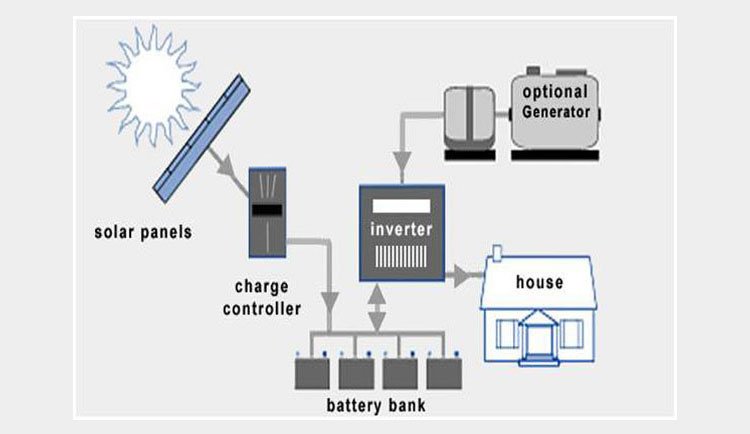
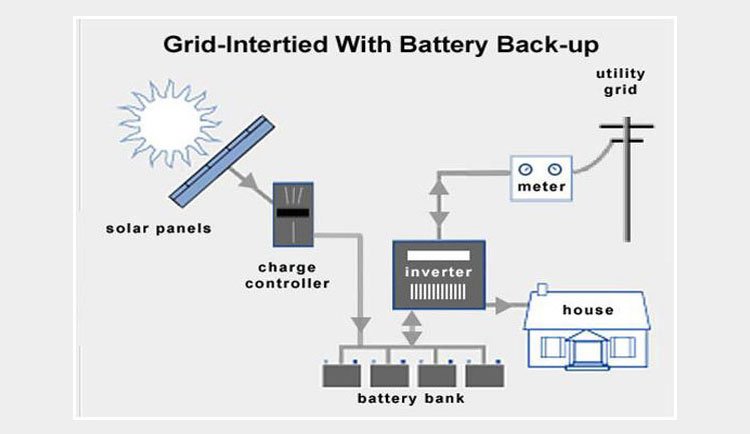
SOYO has developed expertise to execute complete Solar PV Power plants project including Design, Engineering, Supply, I&C and Maintenance on turn-key basis for both Stand-alone and Grid Connected PV Systems from conceptualization to completion for ratings from few Watts to Megawatt capacity as per International Standard. SOYO’s main objective in the EPC space is to provide top end quality services, from the initial conceptualization & design stage to the installation & commissioning stage, we deploy, world class solar technology to deliver affordable solar power. A photovoltaic system is a power system designed to supply usable solar power by means of photovoltaic. It consists of an arrangement of several components, including solar panels to absorb and directly convert sunlight into electricity, a solar inverter to change the electric current from DC to AC, as well as mounting, cabling and other electrical accessories to set up a working system. It may also use a solar tracking system to improve the system’s overall performance. A Solar Photovoltaic (SPV) system or Solar Power System is one of the renewable energy systems which use PV modules to convert sunlight into electricity. The electricity generated can be either stored in a battery or can be used directly, to feed into a grid line or combined with other electricity sources connected to the system. Solar PV system is very reliable and clean source of electricity suitable for wide range of applications (e.g. in residential buildings, bank, office complexes, industries, or for running pumps for agricultural application etc.) The major component of any solar PV systems includes PV modules, Solar Charge Controller cum Inverter (PCU), Battery and Auxiliary energy sources, like utility Grid, wind and DG if available.